
The Joys of Hawaiʻi’s Kōlea
Bird Droppings: 10 Things We Want to Share About Hawaiʻi’s Kōlea
1. Hawaiʻi is the only place in the world where these migratory shorebirds live closely with humans.
2. In Asia, South Pacific nations, and Arctic breeding grounds, Pacific Golden-Plovers are wary of humans and unapproachable.
3. The personality change is essential during breeding season where foxes, jaegers, and other Arctic predators are on the prowl for ground-nesting birds.
4. Kōlea spend nine months of the year in Hawaiʻi and three months in Alaska.
5. Hawaiʻi Audubon holds an annual Welcome Home Kōlea Festival in September. Alaska residents also celebrate Pacific Golden-Plovers and other migratory birds’ returns, hosting annual shorebird festivals in May.
6. Hawaiʻi Audubon Society is working with the Anchorage Museum on a future exhibit sharing Hawaiʻi residents’ experiences with yard-and-park-friendly birds.
7. July began the 5th year of Kōlea Count, Hawaiʻi Audubon’s citizen science project where residents and visitors record observations of Pacific Golden-Plovers.
8. Anyone can contribute either an observation, a story, or a count. All information helps researchers learn more about Hawaiʻi’s plover population.
9. To join in a seasonal count, see this list of sites and email me your choice in the contact tab. (This system keeps names and email addresses private.)
10. The last three years, Hawaiʻi Audubon has sponsored a June trip called Kōlea Quest to Nome, Alaska. We’re in initial stages of a possible fourth trip. If interested, contact Elena at events@hiaudubon.org.
Photo above: Kōlea by Ann Tanimoto-Johnson
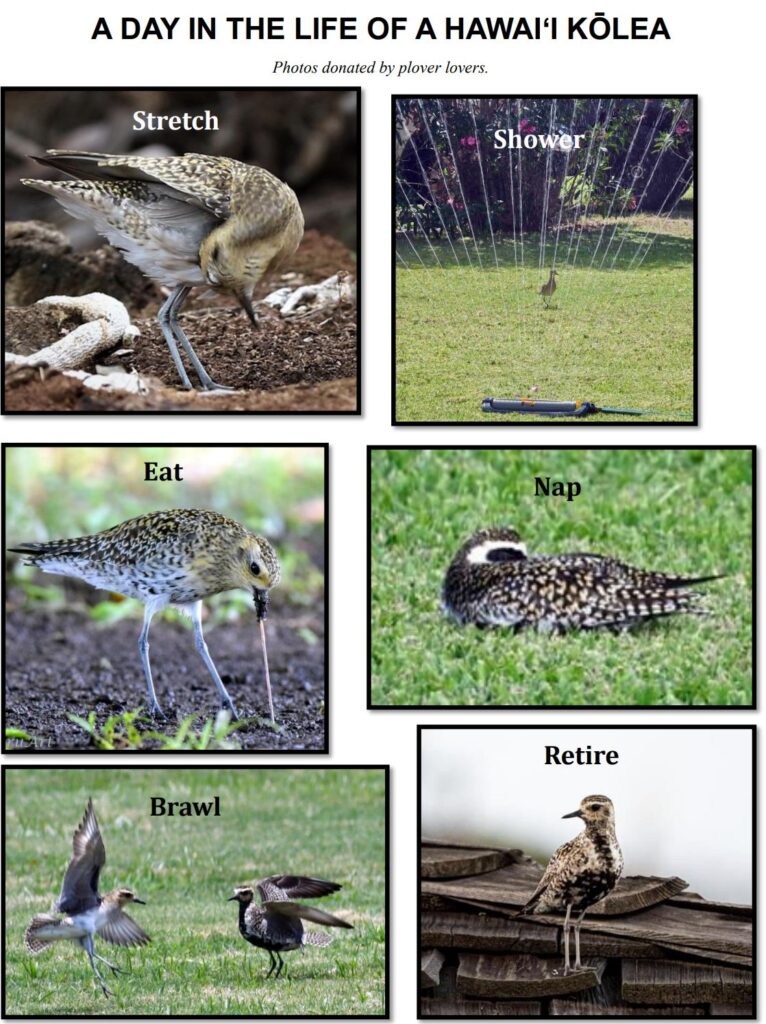
Collage below by Susan Scott