It’s not a pet, it’s a Cattle Egret
10 things we want to share about Western Cattle Egrets
1. All egrets are members of the heron family, Ardeidae. Most white herons are called egrets.
2. The Cattle Egret originated in Africa and spread naturally (and remarkably) on its own in the 1900s to the Americas, Asia, and Australia.
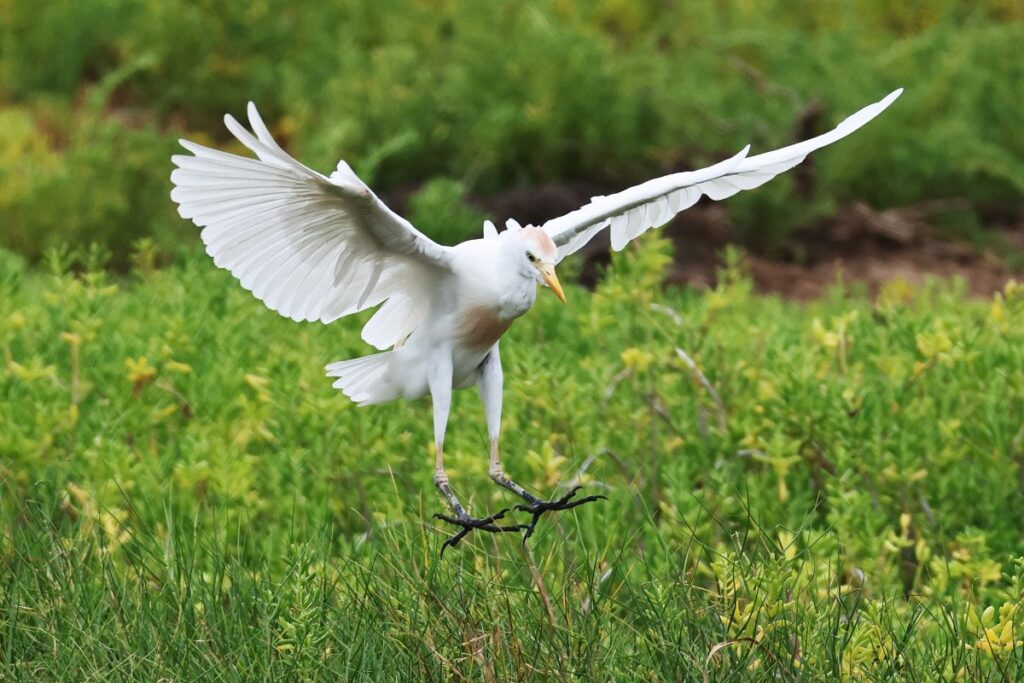
3. In 2023, ornithologists split the Cattle Egret into two species: The Western Egret in the Americas, Europe and Africa; and the Eastern in Asia and Australia. Besides location, the main difference is breeding color. The Eastern has more brown on its head and neck.
4. In a 1959, the Hawaiʻi Board of Agriculture and Forestry (later DLNR) imported Western Cattle-Egrets from Florida. State workers released groups of a dozen or so egrets at seven ranches and dairies on Kauaʻi, Oʻahu, Molokaʻi, Maui, and Hawaiʻi Island, totaling 150 birds.
5. Ranchers hoped the egrets would reduce the flying insect pests that damage hides and cause low weight gains in livestock. Although no studies exist as to the effectiveness of this goal, Hawaiʻi cattlemen reported that the rate of insect harm to their cattle decreased where the egrets were present.
6. Cattle Egrets gradually made their way throughout the Pacific Ocean’s islands and atolls, and to the Northwest Hawaiian Islands, including Midway Atoll.
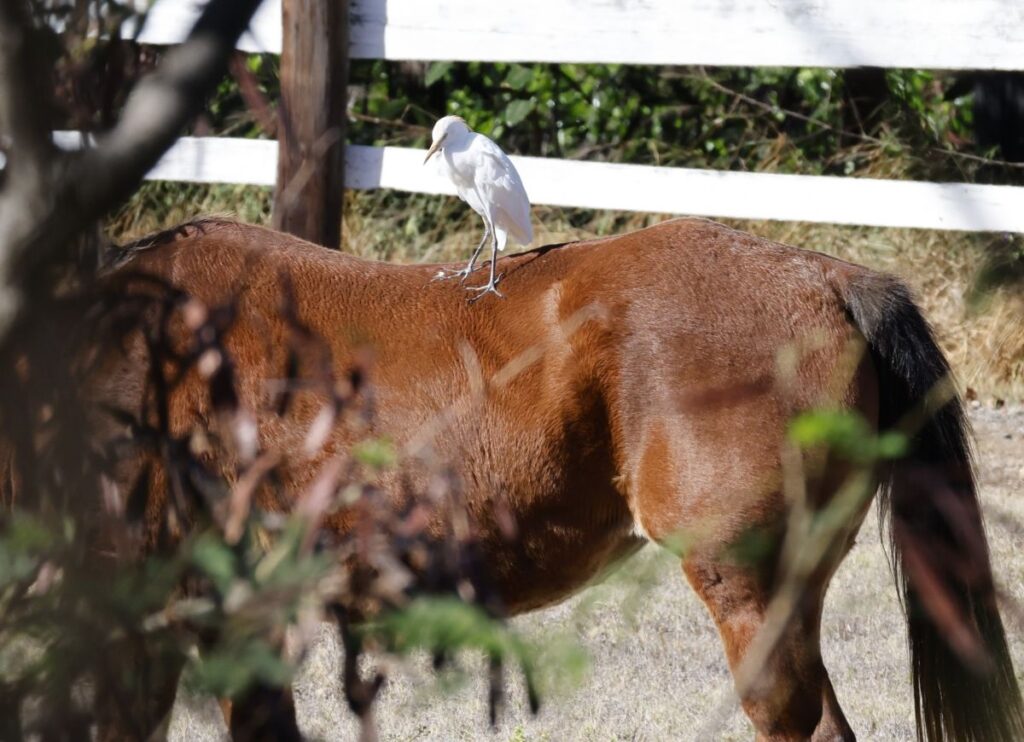
7. Hawaiʻi’s Cattle Egrets sometimes, but rarely, stand on the backs of livestock. Rather, the birds prefer to forage on the ground often seeking out and following lawn mowing and plowing machines. The birds return to colony sites at night to sleep.
8. These birds are exceptionally successful at relocating to greener pastures, and at eating nearly any creature they find. The birds devour grasshoppers, crickets, centipedes, millipedes, moth and beetle larvae, cockroaches, earthworms, frogs, toads, ticks, rats and mice.
9. Unfortunately, Cattle Egrets also eat eggs and chicks of Hawaiʻi’s endemic, endangered waterbirds. In addition, egrets are aircraft hazards.
10. Despite occasional eradication efforts near airports in 1986 and 1988, Western Cattle-Egrets have spread widely throughout the Islands. Today the long-legged white birds with the neck-pumping walk are familiar sights at roadsides, open fields, marshes, and landfills.
Image above: Cattle Egret by Tom Fake. Below: Cattle Egret on horse by Tom Fake.