A Story of Remarkable Adaptability
Bird Droppings: 10 Things We Want to Share About the Common Myna (Acridotheres tristis)
1. Mynas are native to India, the Middle East, and the Himalaya region. About 11 myna species exist, all members of the starling family (Sturnidae.)
2. The Common Myna was introduced to Hawaiʻi in 1866 to eat cutworms and armyworms, moth caterpillars that severely damage sugarcane.
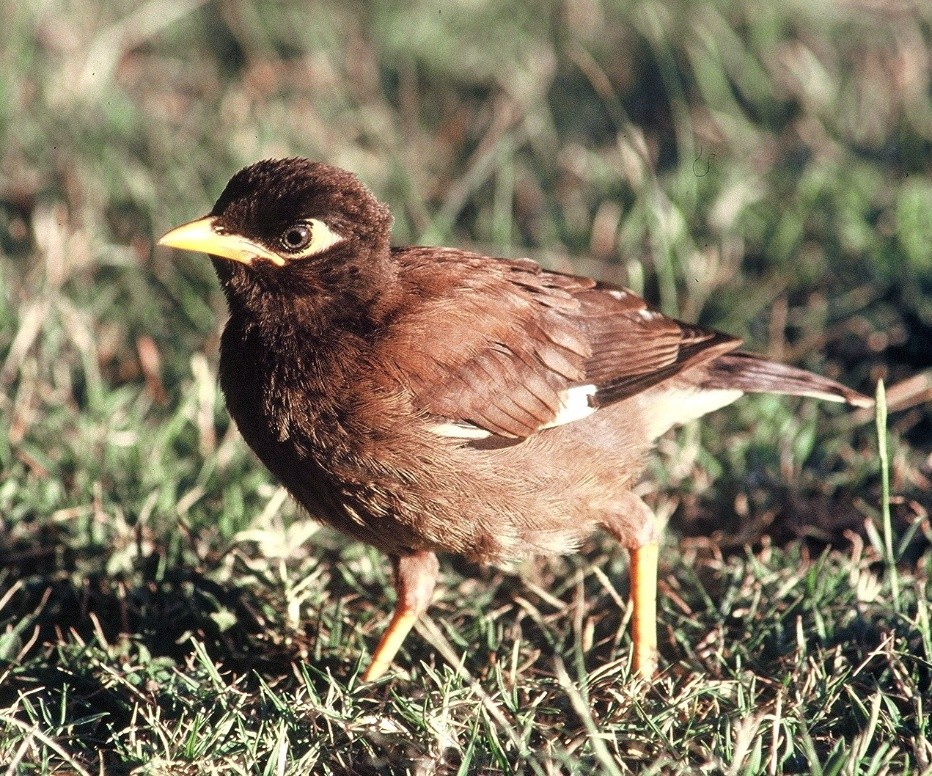
3. The birds succeeded in reducing caterpillar pests in agricultural areas but also adapted remarkably well to city environments.
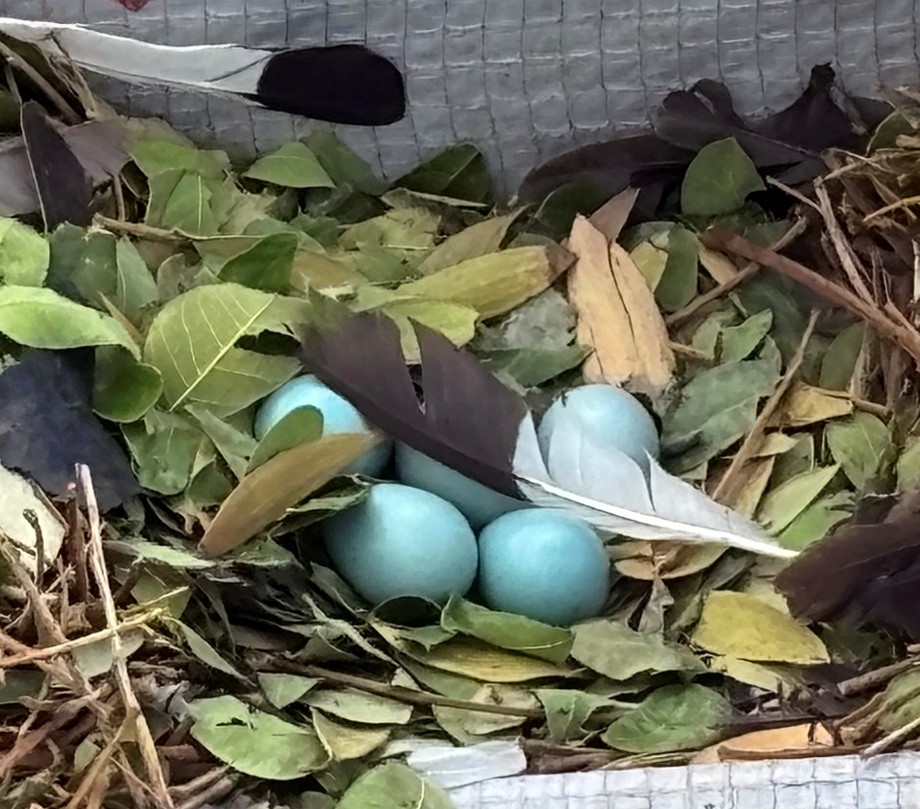
4. Males and females look alike and mate for life. Their 3-to-5 eggs are various shades of blue.
5. The birds eat anything they can find, including fruit, crops, and other bird eggs. Manu ʻai pilau, one of the bird’s ʻōlelo Hawaiʻi names, means bird that eats rotten food.
6. The Common Myna’s other ʻōlelo Hawaiʻi name, pihaʻekelo, means full of voice, referring to the bird’s noisy nature.
7. The species, along with the Common Hill Myna, have a remarkable ability to mimic human words as well as other bird sounds.
8. In spite of being personable and good insect controllers, mynas are not universally loved. The birds roost nightly in trees in noisy flocks that can number in the thousands. In 1892, a Hawaiʻi observer described the myna’s song “about as musical as a cat fight.”
9. A defender in Hawaiʻi in 1900 wrote that “even if the mynah is not an ideal bird it is better than no bird at all.” In 1933, another observer wrote, “the bird’s advantages to the [Hawaiian] islands are popularly and decidedly underrated, while its disadvantages are overemphasized.”
10. Hawaiʻi’s Common Myna population hasn’t fluctuated much throughout the 20th and 21st centuries. The active, hopping bird is a permanent part of life in Hawaiʻi.
Image above: Common Myna, Hanauma Bay ©David Schrichte
Image below: Common Myna eggs with distinctive black-and-white wing feathers. James Campbell National Wildlife Refuge ©Ella Wilmot