How Great Are Frigatebirds?
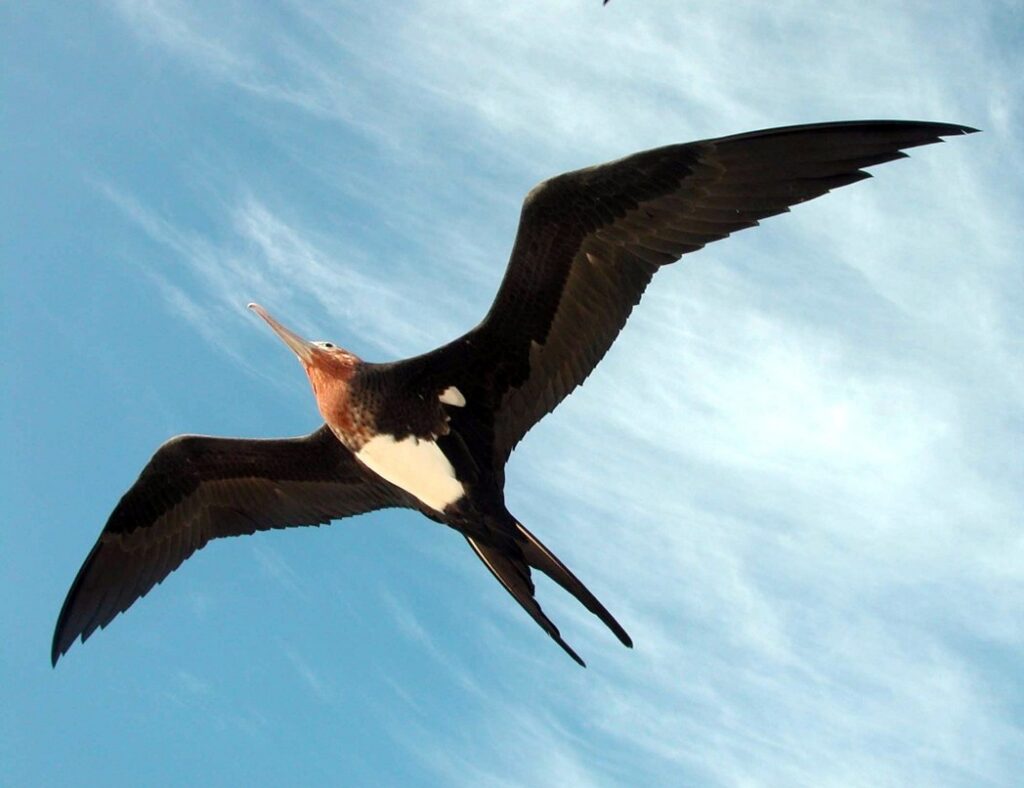
1. Frigatebirds are unmistakable in flight due to their bent, pointed wings and deeply forked tails that work like scissors during elaborate flight maneuvers.
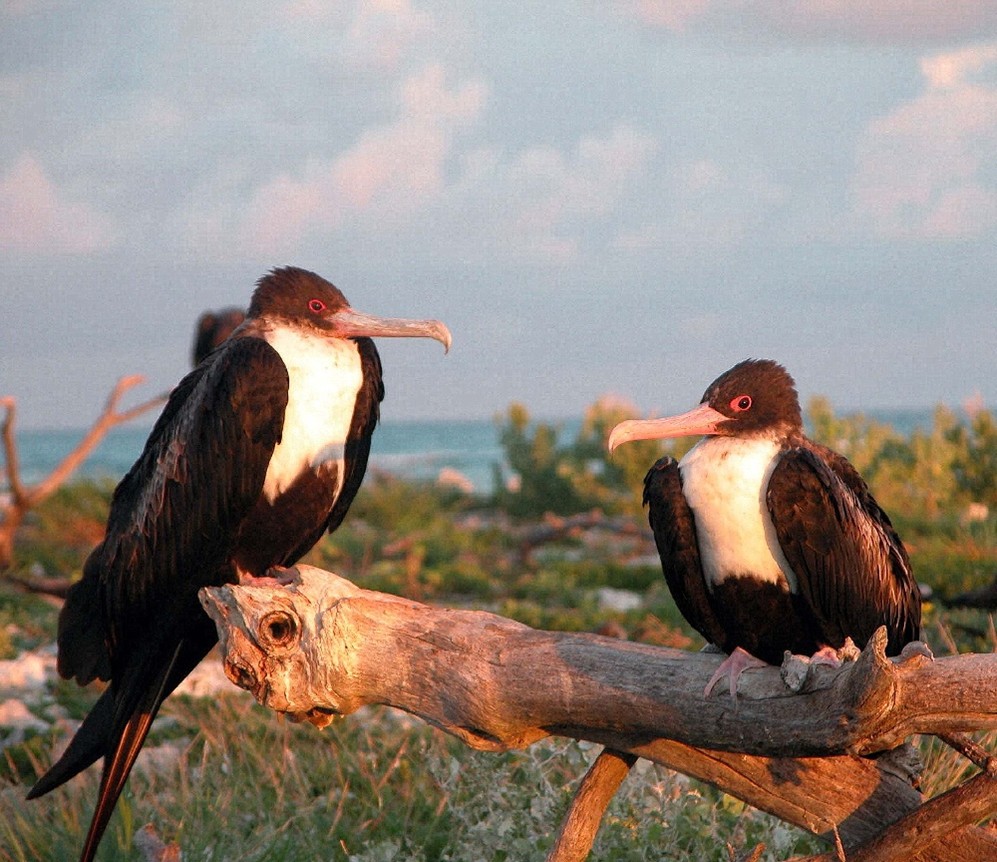
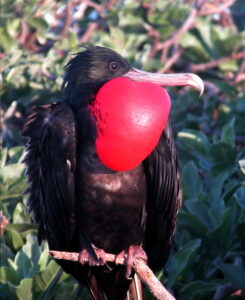
2. You can tell a lot about frigatebirds soaring overhead by their color: Males are all black (they inflate their red throat pouches only while breeding.) Females are black with white chests and throats. Immatures of both sexes are black with white heads, throats, and chests.
3. Frigatebirds catch most of their own fish from the ocean’s surface. The birds’ occasional (and impressive) stealing of fish from other seabirds in flight, however, has given frigatebirds their rascally names.
4. The birds’ English common name refers to small sailing ships called frigates, preferred by 16th-century pirates. The Hawaiian name ʻiwa (pronounced EE-vah) means thief.
5. Frigatebirds have the largest wingspan-to-body-weight ratio of all seabirds. Wingspans reach about 7 feet on 3-pound birds.
6. Since air currents and updrafts help frigatebirds fly, the birds are usually seen on windward coasts. Sometimes during Kona storms, when winds blow from the south, frigatebirds come to islands’ leeward sides. As a result, some people in Hawaiʻi call frigatebirds storm birds.
7. Frigatebirds don’t swim or dive. (Their feathers aren’t waterproof.) While soaring over the water, the birds use their long, hooked beaks to snatch fish and squid from the surface.
8. Because their short legs and broad wings make it difficult for frigatebirds to take off, they do not land on the water or walk on the ground. When ashore, frigatebirds perch in elevated places.
9. Five frigatebird species soar throughout the world’s tropics. The two most common by far are the Great Frigatebird (Fregata minor), mostly in the Pacific, and, the slightly larger Magnificent Frigatebird (Fregata magnificens), found predominately in Central and South America’s tropical regions.
10. Because they are vulnerable to cats, rats, and mongooses, our frigatebirds roost on small islands off the main Hawaiian Islands, but nest and raise their young on the remote islands of the Papahānaumokuākea Marine National Monument.