
Sealing Love Letters with Wax 💕
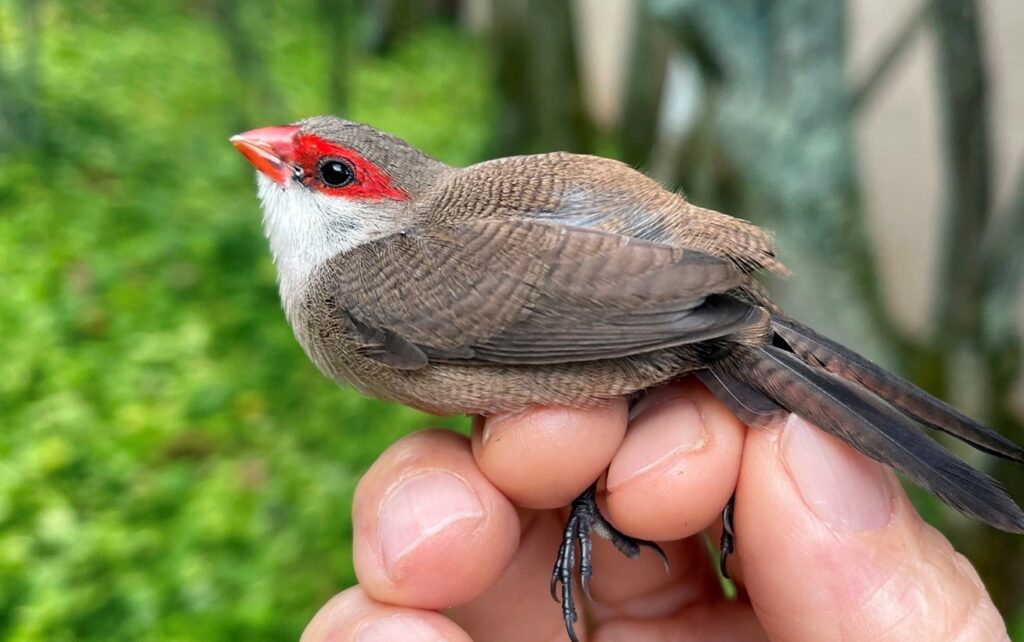
1. The tiny, chirping birds we hear but can barely see in grass are 4-inch-long Common Waxbills. (The bird pictured at the top of this email flew into my house through an open door. We caught and released it unharmed.)
2. Common Waxbills are native to, and widespread throughout, Africa south of the Sahara Desert.
3. Because the bird’s red beak reminded European bird fanciers of the red wax used to seal letters, they called these finches waxbills. Afterward, the name waxbill became used for related finches without red bills.
4. Bird fanciers have kept Common Waxbills as cage birds since the 1700s (at least.)
5. Between 1764 and 1782, unknown persons transported Common Waxbills from Africa to St. Helena as cage pets, giving the bird its other common English name, St. Helena Waxbill.
6. Hawaiʻi’s first Common Waxbills in the wild were reported as a flock of 20-to-25 birds in an Ewa Beach sugarcane field in 1973. The birds either escaped their cages accidentally, or keepers released their pets.
7. During the mid-1980s, Common Waxbills spread throughout Oʻahu. Individuals may have been released on Maui in the late 1990s, although the birds can also fly island-to-island. Today the species is seen throughout Kauaʻi, Oʻahu, Maui, and Hawaiʻi Island.
8. Through the global pet trade, Common Waxbills have been released, and are breeding, around the world including St. Helena, the Iberian Peninsula, Brazil, Taiwan, Puerto Rico, and various Indian and Pacific Ocean islands.
9. Males and females look alike. These active, cheeping birds forage for grass seeds on the ground in flocks. Common Waxbills weigh less than ½ ounce (5-to-11g), light enough to cling to grass stems while eating seed heads.
10. Eating grain from farm fields can make waxbills unwanted pests, but the birds also eat insect pests, such as ants, termites and moths.
Picture above: Common Waxbill by Susan Scott
Below: Common Waxbill by Tom Fake