Is It a Sparrow? Is It a Finch?
Bird Droppings: 10 Things We Want to Share About Java Sparrows
1. They aren’t sparrows. The Java Sparrow is a finch in same finch family (Estrildidae) as waxbills and munias. Other names for this species is Java Finch and Java Ricebird.
2. The scientific name, Padda oryzivora, comes from the bird’s fondness for eating rice in paddies. Padda comes from the Malay word for rice, padi. The Latin word oryza means rice, and the Latin suffix -vorus, means eating.
3. Hawaiʻi no longer has rice paddies, but Java Sparrows are a potential threat to grain crops. The birds also eat grass seeds, insects, flowers, and fruit.
4. It’s possible that Java Sparrows arrived in Hawaiʻi before 1900. Dr. William Hillebrand (1821-1886) a plant and bird collector, returned to Oʻahu directly from Java with an unknown number of bird species after an Asia trip in 1865 and 1866.
5. In 1964, a tame (probably pet) Java Sparrow was reported on a Bishop Museum lawn. From 1967 to 1969, nine or so birds were reported coming to a feeder and breeding on Diamond Head’s west side, likely one of several species of finches released there in the mid-1960s. From 1922 to 1986, the birds spread throughout the Main Hawaiian Islands.
6. It’s unknown if Java Sparrows dispersed on their own, if pet owners deliberately released their birds, or if caged birds escaped. In 1986, a fisherman reported about 30 Java Sparrows in flocks in the middle of the Molokaʻi Channel flying toward Molokaʻi.
7. The Java Sparrow is native to only three Indonesian islands: Java, Bali, and Kangean. In 2020, the IUCN (International Union for the Conservation of Nature) added the species on its Red List as ENDANGERED.
8. The endangered status surprises Hawaiʻi residents because the species thrives here. Populations in the bird’s native islands, however, have declined severely due to trapping for the cage bird trade.
9. Unlike most birds that court and nest when the length of day increases, Java Sparrows become sexually active when the length of day decreases. In Hawaiʻi and Puerto Rico, Java Sparrows breed in the fall and continue throughout the winter.
10. Males and females look alike. Only the males sing.
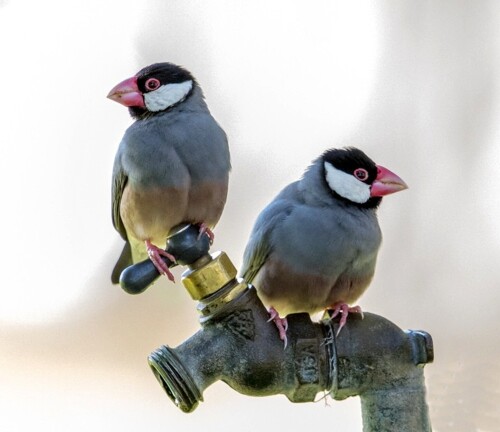
Photo above: Java Sparrows by Tom Fake
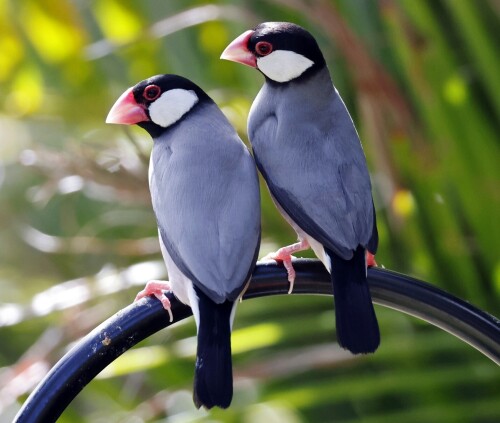
Photo below: Java Sparrows by Rich Downs