Peacocks, Peahens, Peafowl, Pīkake
Bird Droppings: 10 Things We Want to Share About Indian Peafowl (Pīkake)
1. Peafowl are native to India, Nepal, Pakistan, and Sri Lanka. The Indian Peafowl is India’s national bird.
2. People often call both males and females peacocks but technically only males are peacocks. Females are peahens. The term peafowl refers to both sexes. (Scientific name: Pavo cristatus.)
3. The Hawaiian word, pīkake, for peacock is also the name of the white jasmine flower (also native to India) popular for its fragrance. Princess Kaʻiulani (1875-1899) named the flower because it was as lovely to her as her pet peacocks.
4. Peafowl have been in Hawaiʻi at least since 1860. In the 1860s, King Kamehameha V gifted a flock to a rancher in Oʻahu’s Makaha Valley.
5. The birds were popular in ancient Greece and Rome for their beauty and as food for special occasions. Indian Peafowl, both domestic and wild, are found today in tropical and subtropical climates worldwide.
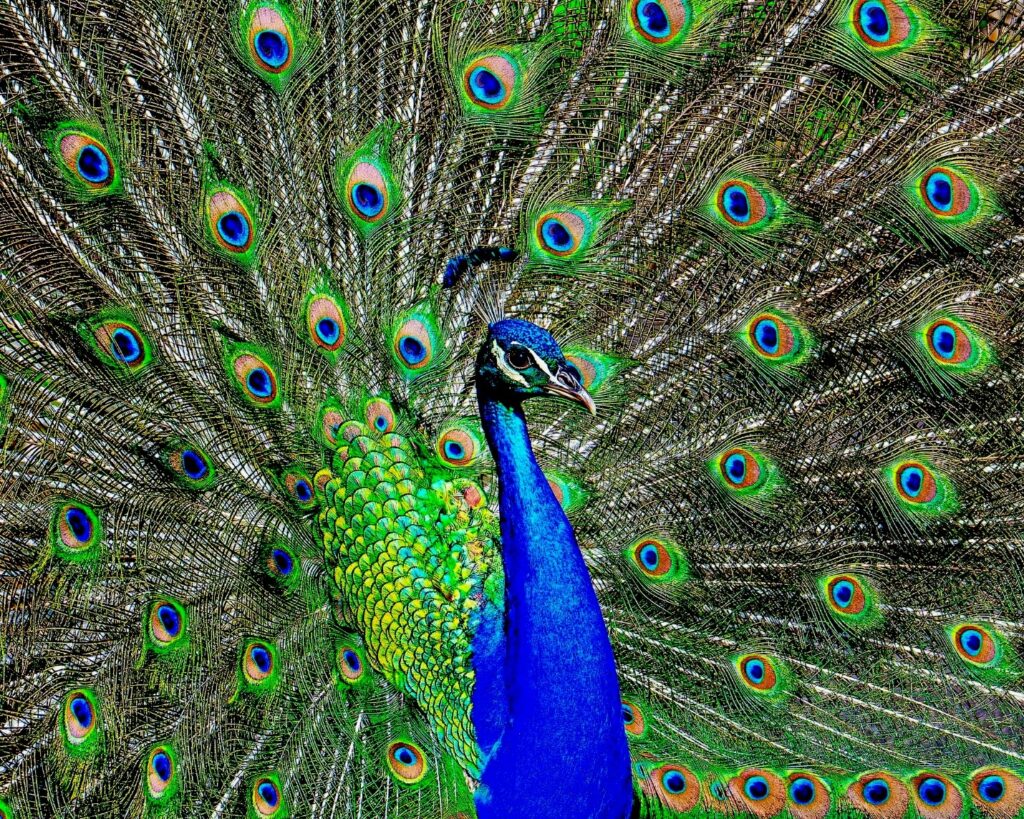
6. Peacocks, about 100 inches (8 feet or 2.5 metres) long from bill tip to tail tip, display their tail feathers in spectacular fanning, shaking courtship dances. After breeding, the distinctive tail feathers drop off as new ones grow.
7. The male’s territorial call is an unmistakable series of screams repeated six to eight times. This far-carrying cry is familiar (and sometimes aggravating) to Hawaiʻi residents with neighborhood peacocks. When alarmed, peahens emit softer calls.
8. Peafowl eat anything they find, including seeds, flower buds, shoots of crops, fruits, worms, insects, lizards, and mice. This broad appetite means the birds can be a nuisance in yards, gardens, and farms.
9. Peafowl fly to cross streams and to roost nightly in trees.
10. Wild birds are wary and can be hard to see in forests. Peafowl living around humans are easier to approach and photograph.
Photo above: Peacock showing off to females at Makalei Golf Club, Kailua-Kona. ©Mike Carion
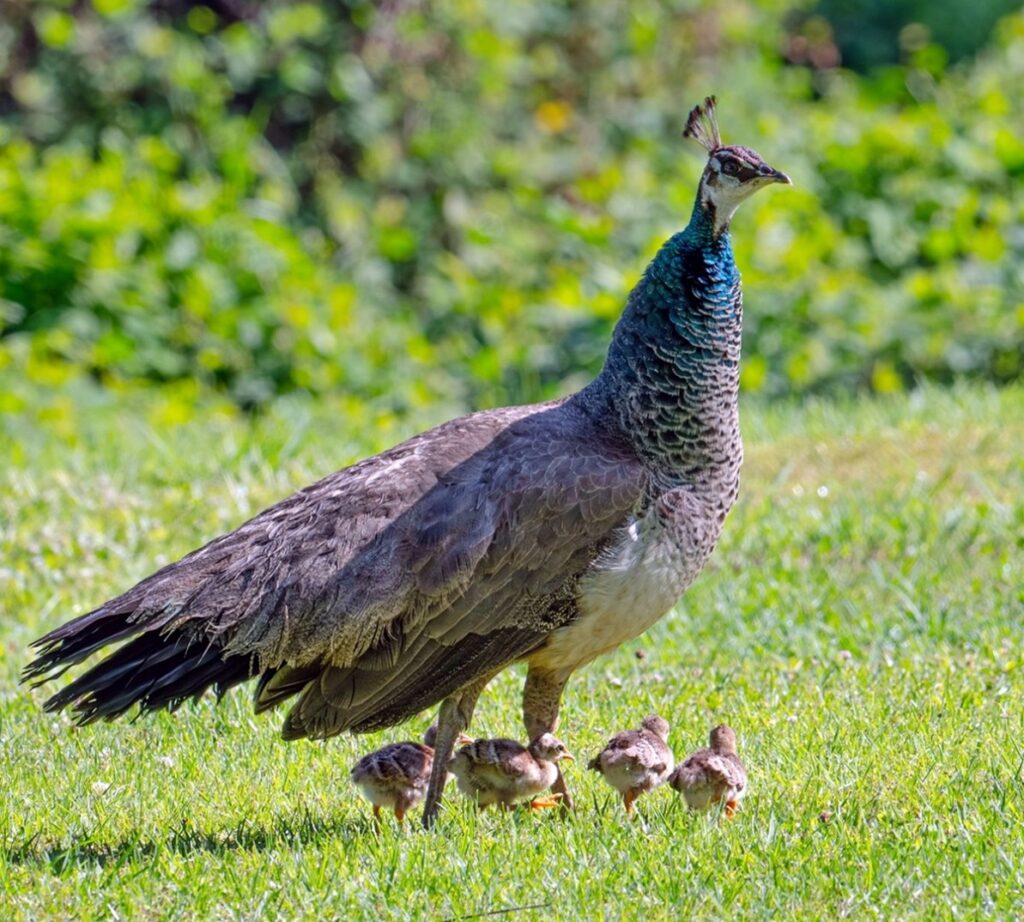
Photo below: The peahen, here with chicks, usually lays 4-to-6 eggs., Makalei Golf Club, Kailua-Kona. ©Mike Carion