
It’s A Bird. It’s A Plane. It’s A Dinosaur!
10 Things We Want to Share About Why Birds Are Dinosaurs
1. The creatures pecking in our yards, flying through our parks, and perching in our trees are descendants of the only dinosaurs that survived a mass extinction event 66 million years ago.
2. The event was a six-mile-wide asteroid that crashed into Mexico, shooting a plume of molten material and particles into the atmosphere blocking sunlight. Most of Earth’s plants, the basis of most food webs, died.
3. At the time, three dinosaur groups roamed the Earth. All the dinosaurs in two of those groups were extinct a year after the collision.
4. Some little ones in the third group, however, survived. These were theropods, a type defined by walking on two legs, having hollow bones, and typically being carnivores, or meat eaters.
5. Other theropod features are backward-curving teeth, a three-toed foot, and, in some species, feathers.
6. Several large theropods, Tyrannosaurus rex and two Velociraptor species, did not survive the extinction.
7. One theory as to why big therapods died and small ones survived is location. It’s likely that places on the side of the planet opposite Mexico weren’t as hard hit.
8. In those remote locations, small theropod dinosaurs perhaps survived by eating fallen seeds or fish in ponds. Some of these feathered therapods moved into trees for food or protection.
9. Over millions of years, the surviving dinosaurs evolved into about 11,000 bird species with genetic studies continually revealing more.
10. In the late 1990s, after discoveries of turkey-sized fossils in China showing hollow bones, feathered bodies, and avian-related chest, hip and foot structures, researchers declared it official: All birds are dinosaurs.
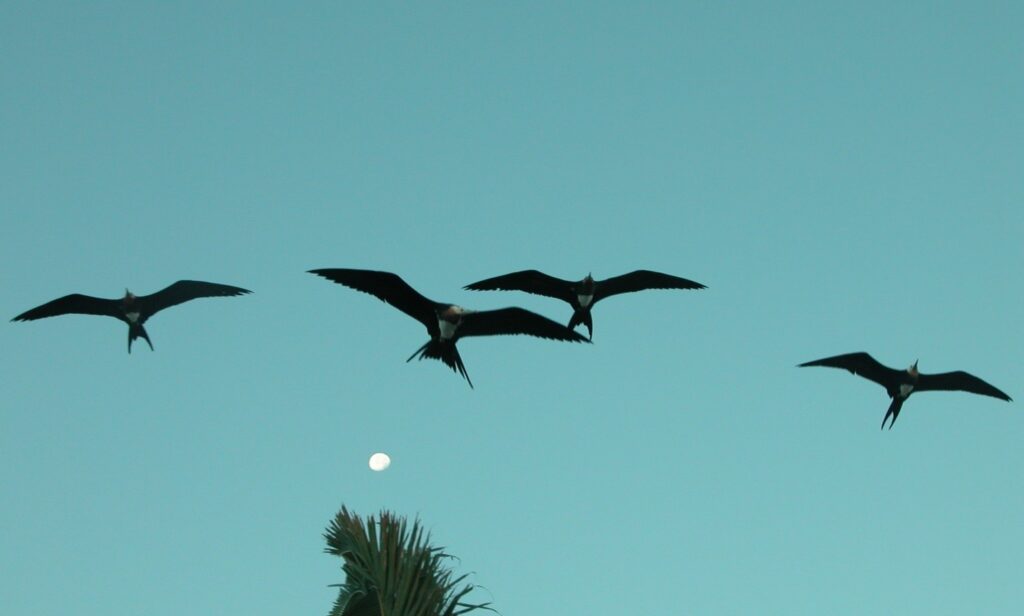
Top image: ʻIwa (Great Frigatebirds) soaring at Lalo (French Frigate Shoals), Papahānaumokuākea Marine National Monument. ©Susan Scott
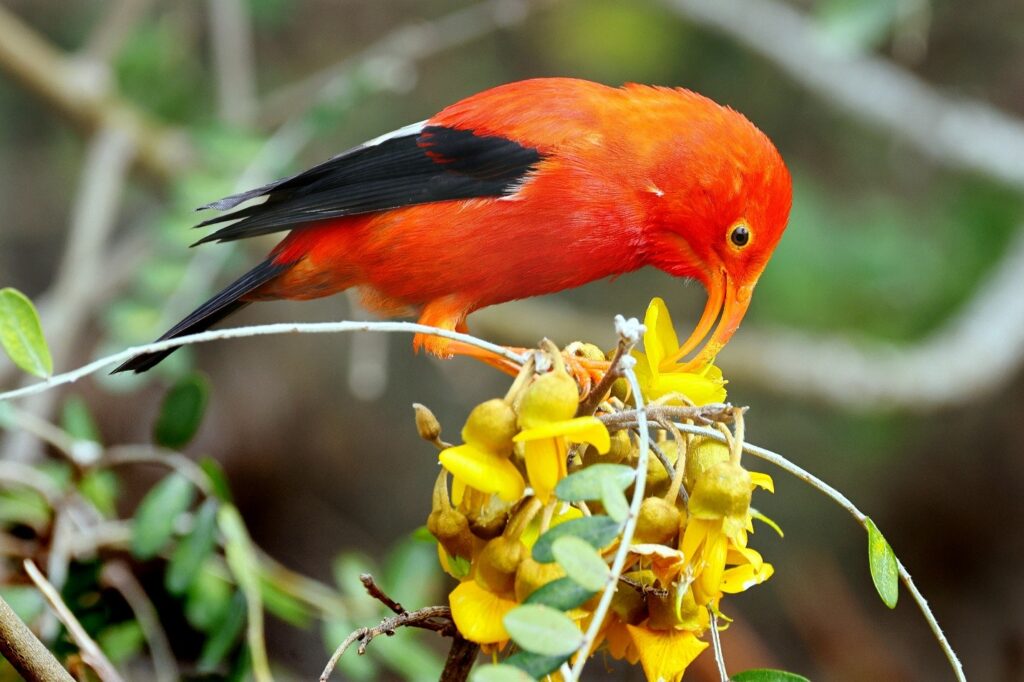
Second image: An endemic ʻiʻiwi (Scarlet Honeycreeper) foraging on native māmane. © Robert Weber