This Bird Is Such A Hoot 🦉
Bird Droppings: 10 Things We Want to Share About Pueo, Hawaiian Short-eared Owl
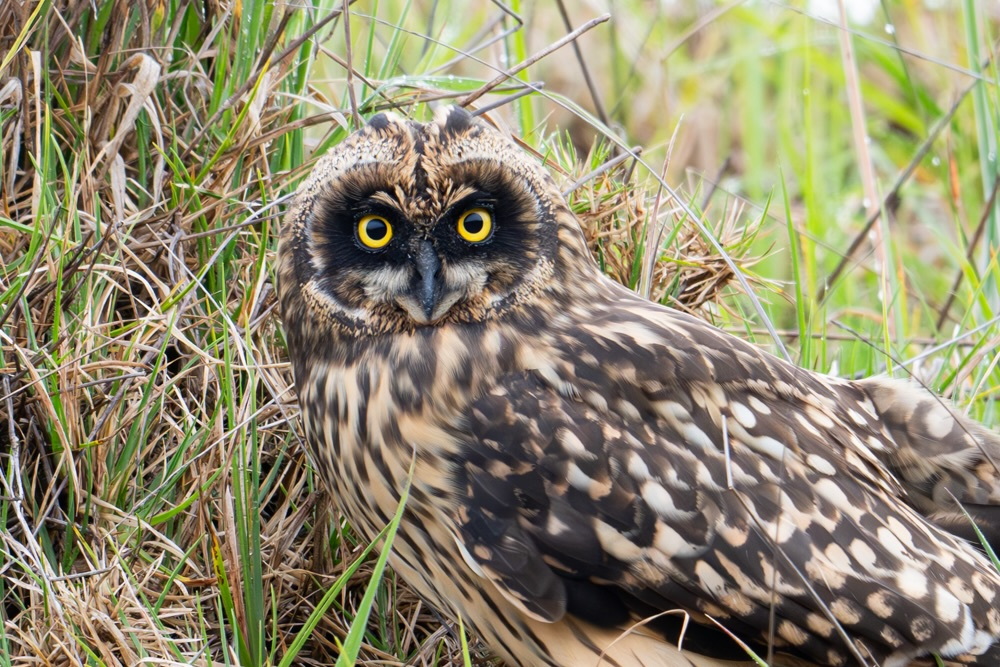
1. Pueo is a subspecies of the Short-eared Owl (Asio flammeus), one of the most widespread owls in the world, native to North America, Eurasia, and various islands.
2. Hawaiʻi’s pueo is one of 10 other Short-eared Owl subspecies, each endemic to its own area. (Subspecies are populations that live in different areas, vary in some physical features, and can successfully interbreed.)
3. The pueo is a bit smaller with darker feathers than its ancestors. It is the only native raptor that breeds on all the main Hawaiian Islands.
4. The so-called “ears” on the head that give some owls their common names (Short-eared, Long-eared, Great Horned) are tufts of feathers. Owl ears are openings on the side of the head next to the eyes and covered by feathers.
5. Pueo nest on the ground in grasslands and marshes. Pueo hunt around dusk and dawn, eating rodents, insects, and birds.
6. Fossil records suggest that Short-eared Owls began breeding in Hawaiʻi after humans arrived in the islands around 1000 A.D. It’s possible that forest clearing offered more open habitat for the owls, and the introduction of Polynesian Rats (Rattus exulans) provided a steady food source.
7. Pueo are an ʻaumakua, or ancestral guardian, for some Hawaiian families.
8. With pueo numbers in decline due to habitat loss, pesticide poisonings, vehicle strikes, and introduced ground predators such as cats, mongooses, dogs, and pigs, the state lists the Hawaiian Short-eared Owl as endangered. State and federal laws protect pueo on all islands.
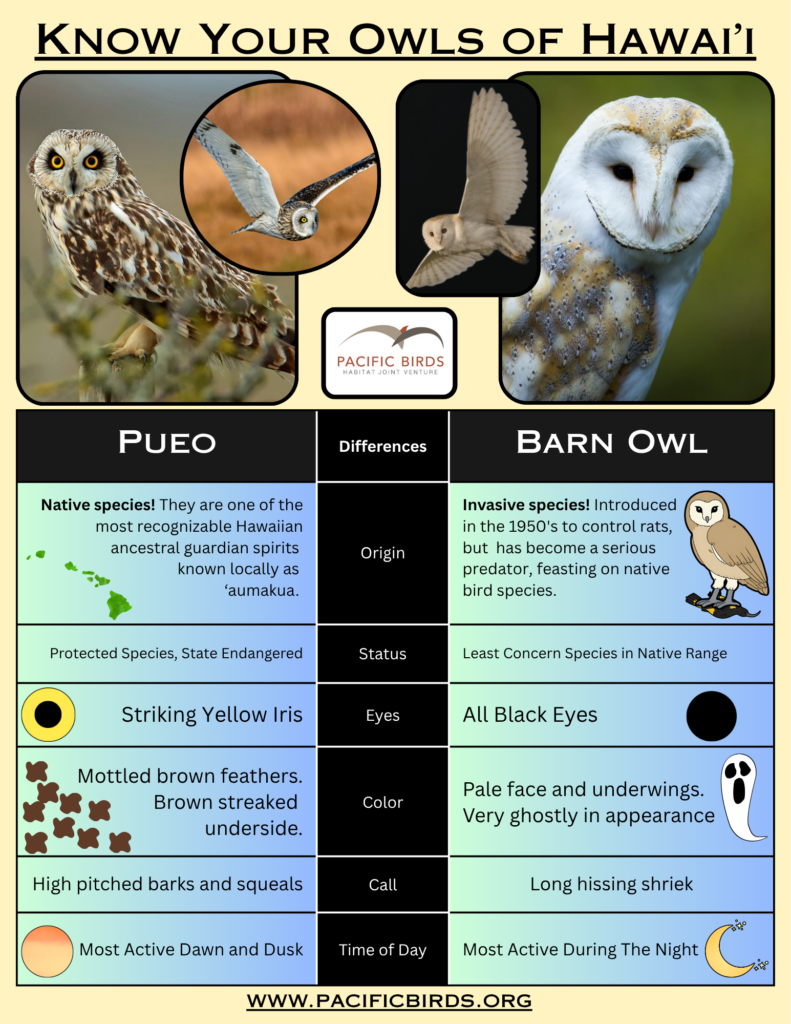
9. The pueo is one of only two resident owl species in Hawaiʻi. The other is the nonnative Barn Owl, introduced by the state from the U.S. mainland in the 1950s to control rats in croplands.
10. Barn Owls hunt at night eating rodents as well as anything else they can catch including Hawaiʻi’s native seabirds (manu o Kū), shorebirds (kōlea and others), forest birds, and waterbirds.