
Let’s Be Grateful For Gobblers
/ Bird News, General Updates / By
Susan Scott
10 Things We Want to Share About Turkeys
- Turkeys are native to North America. Around 1519, Spanish conquistadors found domesticated turkeys in Mexico and brought the birds to Europe.
- The American bird got the name turkey from confusion about its origin. When the good-tasting birds arrived in Europe, people mistakenly thought they were guineafowl relatives from Turkey, naming them turkey fowl or turkey birds.
- In the 1600s, Dutch traders introduced turkeys to Taiwan, the birds eventually making it to mainland China. Hawaiʻi’s first domesticated turkeys arrived on Hawai’i Island on a ship from China in 1788.
- From 1815 to 1963, people continued introducing turkeys to the main Hawaiian Islands, where the birds breed in the wild. The largest population today is on Hawaiʻi Island.
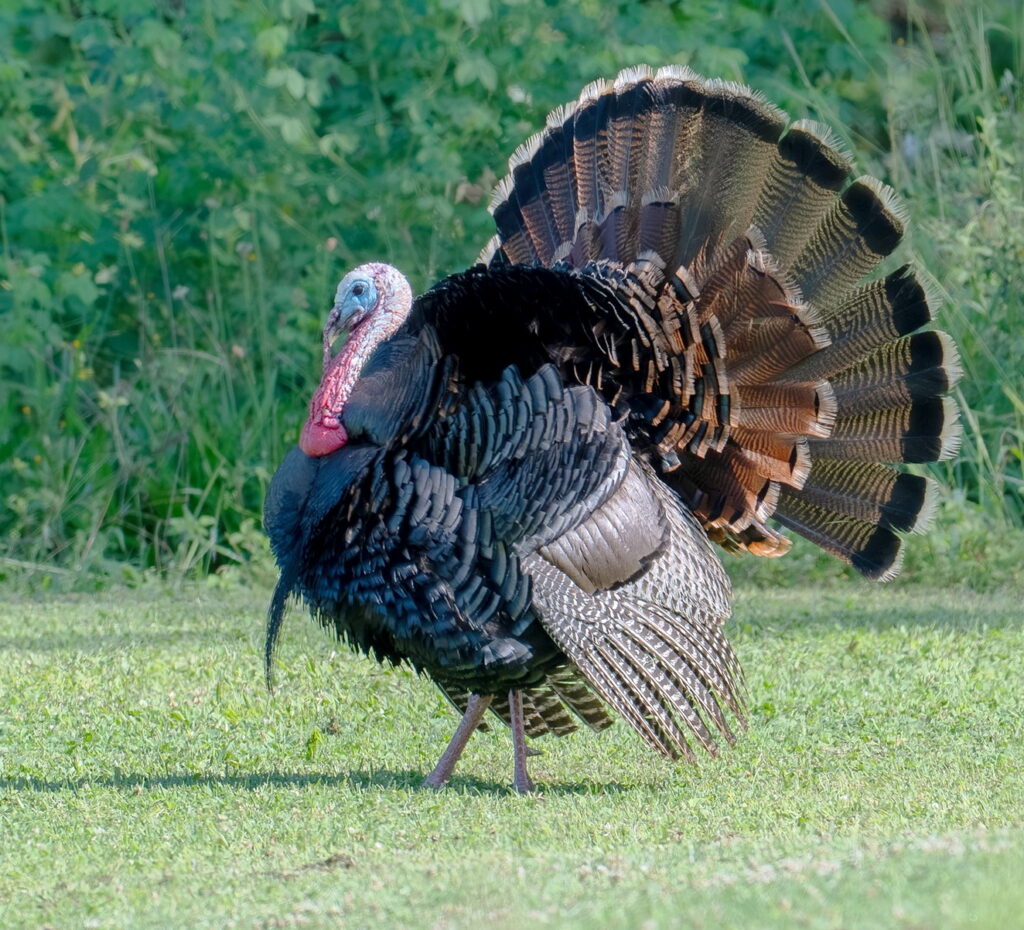
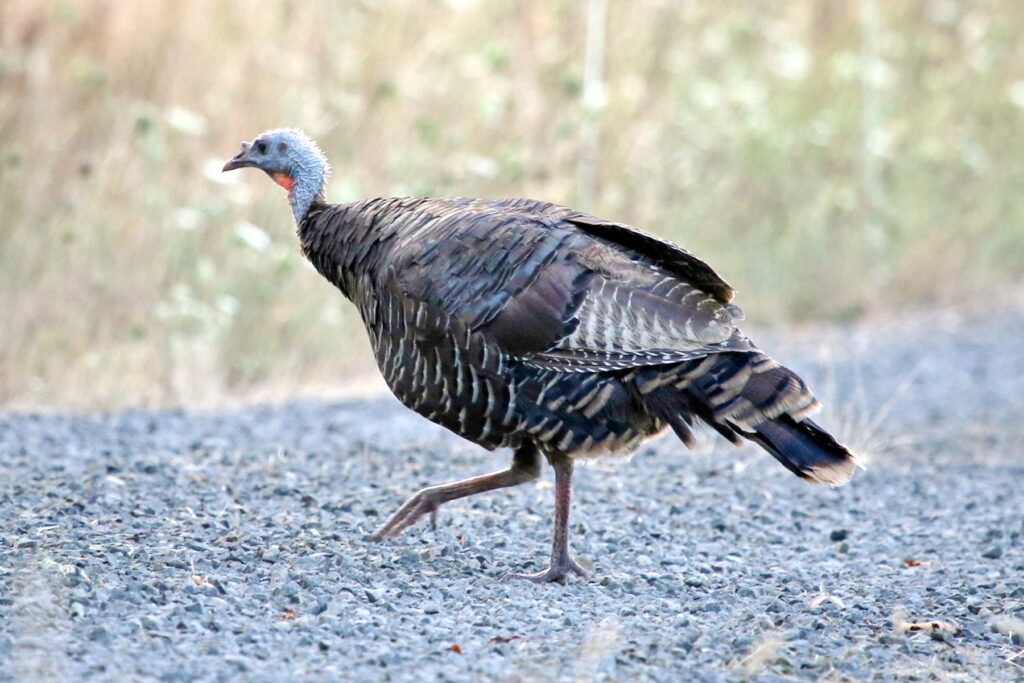
- Adult male turkeys are called gobblers, toms, and in ʻōlelo Hawaiʻi, pelehū kāne. The name gobbler comes from the adult male’s call to attract females, called hens.
- Wild turkeys get around mostly on foot but are strong fliers for short distances. The birds roost in trees at night.
- Turkeys forage in flocks on the ground for seeds, nuts, fruit, insects, and snails. Some Hawaiʻi turkeys forage for crabs on beaches. Occasionally turkeys fly into shrubs or low trees for fruit.
- Like chickens, males provide no parental care. Newly hatched chicks follow their mother for a few days as they learn to find food on their own.
- Restoring the Wild Turkey in North America is a wildlife management success story. Due to overhunting and habitat destruction, turkey numbers decreased drastically through the early 20th century. Released farm turkeys did not survive in the wild.
- In a 1940s trap-and-transfer program, wildlife workers began catching wild turkeys and releasing them in new areas. Today wild turkeys are found in all lower 48 states, Mexico and parts of Canada.
Top image: Male turkey Hawaiʻi Island. ©Mike Carion
Image above: Female turkey. ©Tom Fake